Mastering the Essentials of Pai Gow Poker

We commonly find Pai Gow Poker portrayed as a easygoing, social table game, yet underneath its calm surface lies a deep strategic challenge that rewards careful study https://tuffpuffscasino.com/. For UK players seeking to broaden their casino repertoire, this blend of ancient Chinese dominoes and classic poker offers a uniquely engaging experience. We will take you through the essential rules, hand-setting strategies, and the realities of playing at a reliable online platform like TuffPuff Casino, where we found a diverse table games selection and a supportive environment for beginners.
What Is Pai Gow Poker and How Does It Differ from Traditional Poker?
Pai Gow Poker represents a casino table game that merges the tile-based game of Pai Gow with the hand rankings of standard poker. The crucial difference lies in the fact that you are not competing against other players but against the dealer. You get seven cards and must create two separate hands: a five-card high hand and a two-card low hand. Both hands must beat the dealer’s corresponding hands to win. This dual-hand structure converts the game from a simple draw into a puzzle of risk allocation, which we find endlessly fascinating.
Traditional poker variants like Texas Hold’em focus on outplaying opponents with betting and bluffing, whereas Pai Gow Poker is a pure game of hand composition against a fixed dealer procedure. The dealer follows a predetermined “House Way” rule set, taking away the psychological element. This makes the game more predictable and mathematically driven. We value that the absence of bluffing levels the playing field, allowing newcomers to focus on learning optimal hand-setting without the pressure of reading opponents or facing aggressive raises.
Another key distinction involves the pace of play. Pai Gow Poker moves deliberately, with a high frequency of push results where hands tie and no money changes hands. This stretches your bankroll and gives you time to think. For UK players accustomed to the fast tempo of slots or blackjack, the methodical rhythm can feel like a welcome change of pace. At TuffPuff Casino, the digital interface we examined mirrors this unhurried flow, giving you ample time to set each hand before the reveal.
The game also uses a 53-card deck, including a single joker. This joker is not a full wild card; it can only complete a straight, a flush, a straight flush, or act as an ace. This semi-wild rule creates nuanced decisions, especially when you hold four cards to a straight or flush. Understanding this joker’s limitations is one of the first steps toward mastering the basics, and we will cover it in detail in the next section. The joker’s constrained role is what gives Pai Gow Poker its distinctive strategic texture.
Grasping the Pai Gow Poker Hand Rankings and the Joker’s Role
The hand rankings in Pai Gow Poker adhere to the same hierarchy as standard poker, with one exception: the second-highest straight is A-2-3-4-5, also known as the wheel. In the five-card high hand, a royal flush is the strongest, followed by a straight flush, four of a kind, full house, flush, straight, three of a kind, two pair, and one pair. The two-card low hand only identifies pairs and high cards; there are no straights or flushes in the front hand. This clear separation eases the initial learning curve.
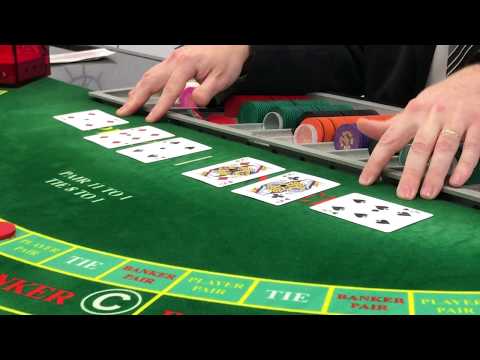
The joker’s role often puzzles new players but is straightforward once you break it down. The joker cannot be used to form a pair, three of a kind, or four of a kind on its own. It can only stand in for a card that completes a straight, a flush, a straight flush, or serve as an ace. If none of those possibilities exist, the joker simply becomes an ace. We have found that memorising this rule prevents costly mis-sets. For example, if you hold A-K-Joker and three unrelated low cards, the joker acts as an ace, giving you a pair of aces in the high hand.
When the joker helps complete a straight or flush, it fills the exact missing rank. Suppose you hold 5-6-7-8 and the joker; you can complete a straight, using the joker as either a 4 or a 9, enhancing your five-card hand. The same applies to a four-card flush draw: the joker becomes the necessary suited card. This flexibility can turn a marginal hand into a strong two-hand combination. We recommend always verifying whether the joker can improve your high hand before defaulting to using it as an ace.
One fine point is that the joker can create a copy of a card already in your hand for a straight or flush, but never for a pair. In a flush, the joker can represent any suited card, even if you already hold a card of that rank. This rule means you can effectively have five of the same suit with a duplicated rank. In practice, we see this most often when you hold four to a flush and the joker completes it. The resulting flush is ranked normally by its highest card, with no special penalty for the duplicated rank.
Betting Flow and the House Way: What You’ll Find at the Table
A standard Pai Gow Poker round commences with each player making an ante bet. The dealer then distributes seven face-down cards to each position, including themselves. You take your cards and set them into two hands on the marked layout. Once all players have set their hands, the dealer turns over their own seven cards and arranges them based on the house way, a predetermined set of rules that dictates how the dealer must arrange any given hand. This transparency is one of the game’s most engaging features for analytical players.
The house way differs somewhat between casinos, but it generally follows a cautious logic that emphasizes a strong high hand. For instance, a typical house way will never split two pair unless the overall value is very high, and it always holds a full house together. Because the dealer has no discretion, you can forecast the dealer’s hand structure with fair accuracy. We apply this knowledge to adjust our own setting strategy: if we recognize the dealer will likely hold a pair in the high hand, we can organize our hands to maximize the chance of taking at least one of the two comparisons.
After the hands are set, the dealer pits their high hand against your high hand and their low hand against your low hand. If you take both, you get even money on your bet subtracting a 5% commission, which is the standard rake in most UK-facing online casinos such as TuffPuff Casino. If you drop both, you give up your bet. If you take one and forfeit one, the bet is a push and you receive your stake back. This three-outcome structure leads to a high push rate, often about 41%, which implies your bankroll can last a long time even during a rough streak.
We also found that many online editions, like the one we evaluated at TuffPuff Casino, feature a side bet called the Fortune Bonus. This additional wager pays based on the quality of your seven cards irrespective of the outcome against the dealer, with payouts for a straight or better. While the side bet brings excitement, it holds a substantially higher house edge. Our analytical approach suggests treating it as a minor entertainment extra rather than a core part of your strategy. The main game with its low volatility provides a far more enduring grind.
Playing Pai Gow Poker Online at TuffPuff Casino: What We Found
When we explored the table games lobby at TuffPuff Casino, the Pai Gow Poker selection caught our attention for its user-friendly interface and responsive touch controls. The game ran quickly on both desktop and mobile browsers, with no download necessary. We found that the betting limits were visibly displayed, and the software permitted us to change our stake conveniently between hands. The availability of a detailed paytable and a house way button made the experience welcoming for beginners, while still providing the manual setting option for experienced players looking to optimise every decision.
The overall game library at TuffPuff Casino is not limited to Pai Gow Poker. We also located a broad selection of live dealer games, slots, and other table classics like blackjack and roulette, all supplied by well-known software studios. This range matters because it ensures you can switch between games without leaving the same account. The casino’s UK-facing licence confirms that the random number generators are frequently tested for fairness, which offered us confidence in the reliability of the Pai Gow Poker deal. We always check the footer for the UK Gambling Commission logo, and we saw it present.
One aspect we especially valued was the availability of free-play or demo modes for many table games. While Pai Gow Poker may not always be accessible in demo mode due to its niche status, we noticed that sister table games like blackjack could be played for free. This permitted us to warm up our strategic thinking before wagering real money. We suggest verifying the current game filters at TuffPuff Casino to see if a practice mode is offered for Pai Gow Poker, as this can be an valuable tool for understanding the basics without risk.
The welcome bonus we noticed at TuffPuff Casino included a deposit match and free spins, typical of many UK online casinos. While the bonus terms and conditions vary to slots and table games in different ways, we noted that Pai Gow Poker often qualifies a smaller percentage towards wagering requirements, which is common industry practice. We always read the bonus policy thoroughly to comprehend the game weighting. The key takeaway is that the welcome offer can bring extra value to your initial sessions, but you should confirm the current promotion details on the official site before funding.
How to Set Your Hands: The Essential Strategy
Setting your two hands correctly is the single most important skill in Pai Gow Poker. The main principle is that your five-card high hand must outrank your two-card low hand. If you mistakenly set them the wrong way round, you ruin your hand and automatically lose both halves. This self-balancing constraint compels you to think about the relative strength of your two holdings. We typically start by finding the strongest possible five-card hand, then check what remains for the two-card front hand.
The simplest scenario is when you have no pairs. In that case, you just place your three highest cards in the high hand and the two next-highest in the low hand. For example, with A-K-Q-10-8-5-3, your high hand would be A-K-Q-10-8, and your low hand would be 5-3. The objective is to optimise the low hand without harming the high hand’s ability to beat the dealer’s high hand. We observe that many beginners tend to save too much for the low hand and produce a weak high hand, which is a typical mistake.
When you have one pair, the typical strategy is to keep the pair in the high hand unless it is aces and your remaining cards are extremely powerful. If you separate the pair, you place the pair in the high hand and the two highest remaining cards in the low hand. The exclusion is if you have a pair of aces and can also make a strong two-card hand like ace-king in the low hand, while still keeping a high hand with ace-high or a small pair. We recommend against splitting lower pairs because it diminishes your high hand too much.
Two pairs pose the most frequent strategic decision. The traditional wisdom is to separate two pairs if you can put a strong low hand and your high hand stays a pair of aces or better. For example, with A-A-K-K-9-8-7, you would set A-K in the low hand and A-K-9-8-7 in the high hand, giving you two pair in the back and an ace-king front. If splitting would leave you with a weak high hand of queens or lower, we generally keep both pairs together in the high hand and employ the two highest kickers in the low hand.
Trips demands setting the three of a kind in the upper hand except if the trips are aces. With three aces, you can split them by placing two aces in the top hand and a single ace in the lower hand alongside the next best card, as long as the top hand stays strong. This represents a strong move since a two aces in the lower hand is considered exceptionally strong. For full houses and four matching cards, the standard house strategy typically separates the full house into a three of a kind in the high hand and a pair in the bottom hand, and quads in a similar manner. We suggest studying the standard house strategy rules to contrast your personal decisions.
Money Management and Typical Mistakes to Prevent
Pai Gow Poker’s gentle variance can trick players into a false sense of security, but effective bankroll management stays essential. We advise determining a session budget of at least 40 times your average bet to withstand the inherent fluctuations and the regular pushes. Because pushes return your stake, you can participate in many hands without draining your funds. However, the 5% commission on wins signifies you need to win more than you lose to remain profitable. We always calculate our expected hourly loss based on the house edge, which sits around 2.5% when playing optimal strategy against the house way.
The most common mistake we observe is mishandling the hands, especially when players are distracted or cocky. A fouled hand is an automatic loss of the entire bet, and it happens more often than you might think. Always double-check that your five-card hand is higher than your two-card hand before confirming. At TuffPuff Casino, the software we tested features a helpful “House Way” button that automatically arranges your hand according to the dealer’s rules. This is a superb safety net for beginners, though we advise eventually learning to set hands manually to obtain a strategic edge.
Another pitfall is going after the side bet heavily. The Fortune Bonus wager can award large sums for a seven-card straight flush, but the odds are very unfavorable. We’ve seen players lose their main game profits by betting too much on the side bet. A measured approach is to devote no more than 10% of your main bet to the side bet, and only if you enjoy the occasional thrill. The core appeal of Pai Gow Poker lies in the slow, thoughtful main game, and we feel that is where your focus should be directed.
Failure to control time and session length is also a hidden trap. The game’s unhurried pace means you might play for hours without recognizing how much time has passed. We set a timer or a hand count limit before each session. At an online casino, where the environment is always available, it is easy to drift into marathon sessions. TuffPuff Casino offers responsible gaming tools like deposit limits and reality checks, which we advise activating. These tools enable you to preserve a healthy balance and make sure that the game remains an entertaining leisure activity.

Mobile Play, Safety, and Financial Transactions: Practical Considerations
Engaging in Pai Gow Poker on a mobile device at TuffPuff Casino proved to be an effortless experience in our tests. The site uses responsive design, so the game scales perfectly to smaller screens without sacrificing functionality. We could set our hands through tapping and dragging cards, and the buttons stayed large enough to prevent mis-taps. The title ran without lag over both Wi-Fi and 4G connections, something that is crucial for preserving concentration while playing. Mobile responsiveness is not just an extra; it represents a must, and we were glad to note that TuffPuff Casino treats it seriously.
Protection is paramount while funding an online casino account and providing personal documents. We observed that TuffPuff Casino employs SSL encryption for protecting data during transmission, a standard we anticipate from any reputable UK-licensed operator. Registration demanded standard identity verification, aligned with anti-money laundering regulations. We suggest enabling two-factor authentication if available, but minimally, the encryption and regulatory oversight provide a strong security base. Our assessment of the privacy policy confirmed that personal data is handled in accordance with UK data protection laws.
Banking methods at TuffPuff Casino encompass the options most UK players favor. We saw debit cards, PayPal, Skrill, Neteller, and bank transfers offered. Deposits were prompt, and we determined that the minimum deposit limit was affordable to experiment with a small bankroll. Withdrawal processing times differed by method: e-wallet payouts typically appeared within 24 hours after approval, while card and bank transfers required three to five business days. The pending period for withdrawal review was within the industry norm, and we suggest completing the verification process early to avoid delays.
We also examined the customer support system, because a pending withdrawal or a technical glitch during a Pai Gow Poker hand can be frustrating. TuffPuff Casino provided live chat and email support, and our test query was handled promptly and professionally. The FAQ section addressed common banking and technical topics, which can be time-saving. In our experience, a attentive support team is a sign of a well-managed platform, and it offers a layer of practical reassurance. Being aware that help is available allows you to concentrate on the game itself, which is where your attention should be.
Ultimately, the gambling responsibility tools we talked about previously are worth looking into in detail. TuffPuff Casino provides deposit limits, loss limits, session time reminders, and self-exclusion options. We feel that any serious player should configure these controls irrespective of their experience level. Pai Gow Poker’s slow pace can make it effortless to extend sessions, so a session timer is particularly useful. Using these tools does not diminish the enjoyment; it improves it by keeping the game as a form of entertainment rather than a source of stress. We always advocate for a preventive approach to player safety.
